Automated Marble Sorting System
Light-sensor classification, VEX microcontroller logic, and a 3D-printed servo-driven diverter
One of a two-person team; co-authored the annotated concept designs and worked on the VEX build and autonomous sorting logic
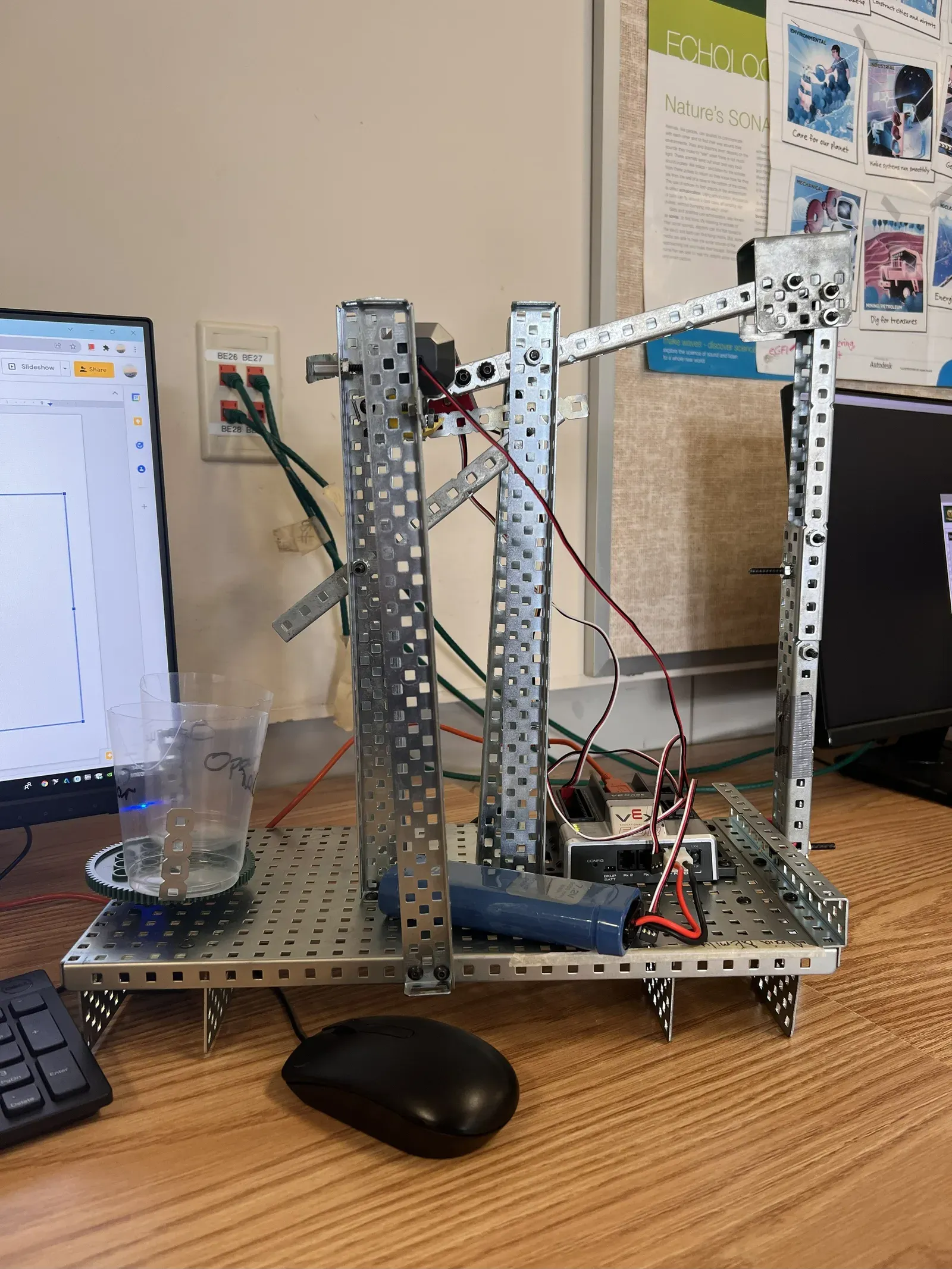
Built a VEX-based mechatronic system that autonomously classified marbles by transparency and diverted at least two marble types into separate collection cups.
Objective
Our two-person team built an automated system that sorts marbles by transparency with no human input: a light sensor detects whether each marble is clear or dark, a VEX microcontroller classifies the reading, and a custom 3D-printed diverter drops the marble into the correct collection cup. The PLTW Principles of Engineering brief (2022) required the machine to accurately and autonomously divert at least two different marble types into separate cups, using only the VEX robotics platform.
Approach
We started on paper. Our annotated concept sketches worked out the full marble path before any parts were built. The design included a funnel sized so every marble fits, a channel that carries marbles to the sensing station one at a time, a flashlight positioned to shine through each marble, and a light sensor on the far side reading how much light passes through. Clear marbles transmit light; dark marbles block it. That single measurement became the classification signal.
The sorting mechanism went through iteration. An early sketch proposed a 3D-printed three-quarter wheel on a servo motor that changes the ramp direction, steering each marble toward the correct pile. We refined that idea into the final design, modeled parts in Autodesk Inventor, and 3D-printed the custom sorting component. On the programming side, the VEX microcontroller runs the autonomous loop: read the sensor, compare against the classification threshold, and actuate the servo to divert the marble, then reset for the next one.
Assembly used VEX structural rails for the frame, with the flashlight, sensor, microcontroller, and battery mounted along the marble path and the collection cups placed at the output.
Outcome
The finished machine met the design requirement, autonomously classifying marbles by transparency and diverting at least two marble types into separate collection cups. It worked with 100% success: each time it ran, all ten marbles were sorted into their designated cup. This project is also where documented concept sketching became a habit that carried into my later CAD and university design work.