Aircraft CAD Model in CATIA
Individual lab series: modeled the fuselage, wings, empennage, and cockpit from the given specifications, then assembled the aircraft
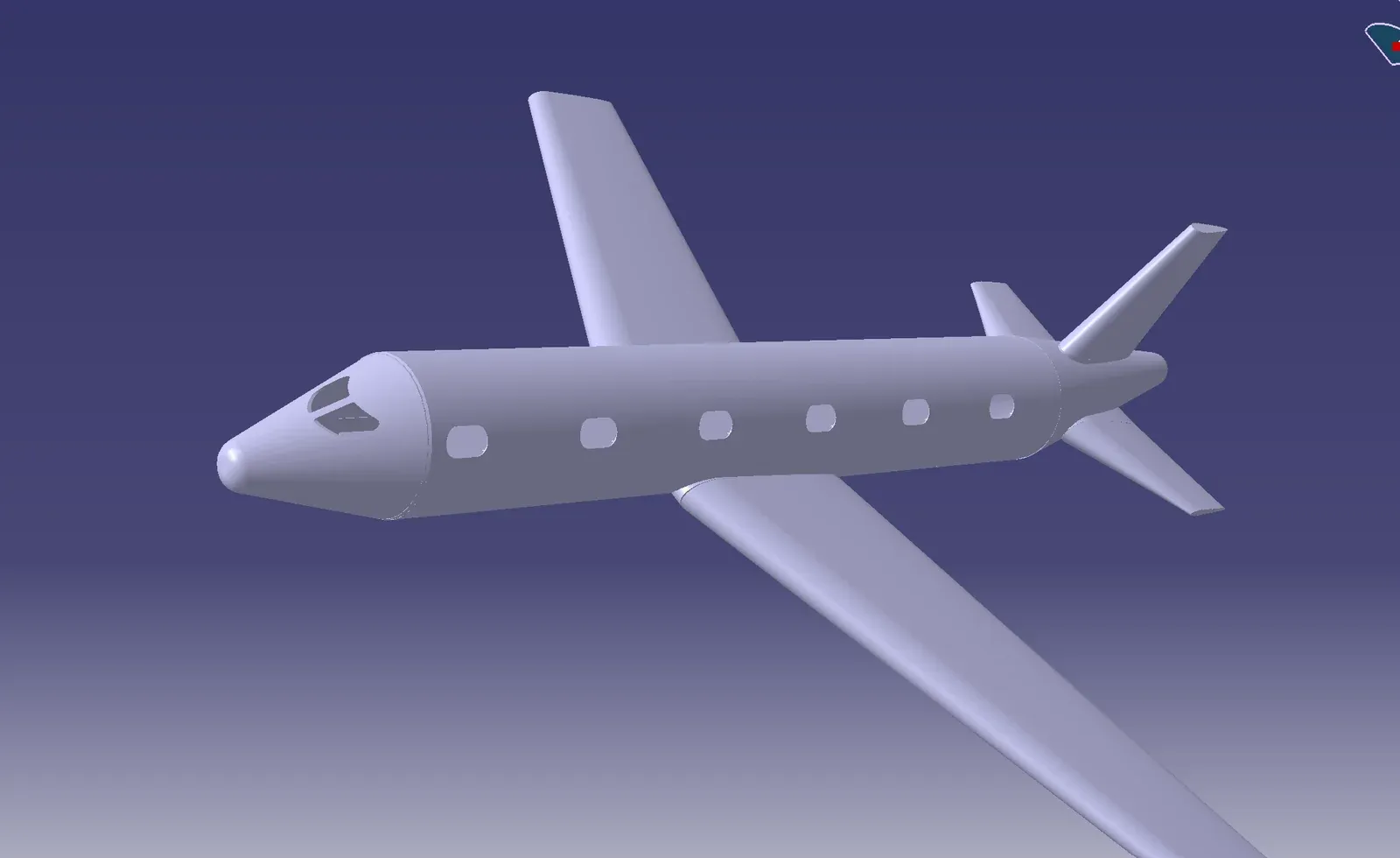
Modeled the fuselage, wings, empennage, and cockpit as individual CATIA parts from the given specifications, then assembled them into the complete aircraft using coincidence and contact constraints.
Objective
Model each aircraft part individually in CAD from the given specifications using CATIA. For the final submission, assemble all of the individual parts into the fully constructed aircraft.
Approach
The aircraft was built up over a series of CATIA labs. The fuselage, wings, and empennage came first, each as its own part file from a specification sheet. The last lab covered the cockpit, the front section that houses the pilots, which I built in Part Design using multi-section solids so the shape could transition from the fuselage cross-section to the nose. That lab also required going back to edit the fuselage and wing with small adjustments so everything would fit at assembly.
Outcome
The parts were brought together in an Assembly Design using coincidence and contact constraints, producing the complete aircraft shown above. Working from a specification sheet rather than a physical object meant reading dimensions carefully and keeping each part to spec so the assembly went together without rework.